

A friend of mine recently sold one of his properties in Accra. On the face of it, a straightforward transaction–a well-located house in the capital, priced at approximately $150,000, which by any measure represents a significant asset. What made it remarkable was not the sale itself, but the timeline it demanded: over two and a half years from the moment the property was listed to the moment the deal finally closed.
Two and a half years of advertising. Two and a half years of viewings, negotiations, dropped offers, and renewed hope. Two and a half years of a substantial portion of his net worth sitting entirely beyond his reach.
That is the part of the property investment conversation in Ghana that we rarely have with any seriousness.
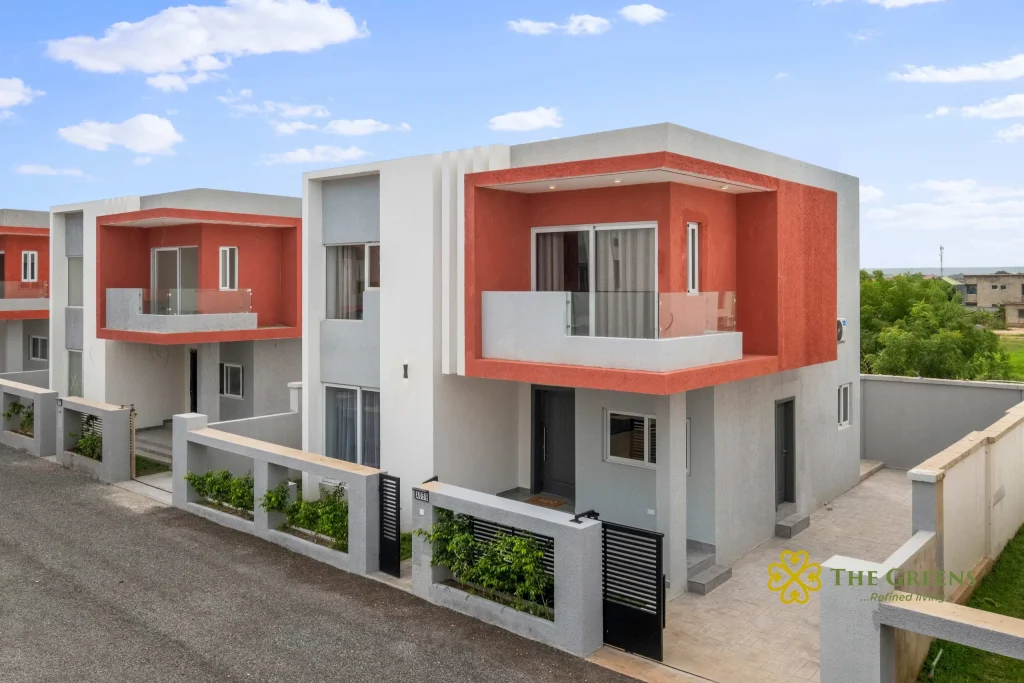
When we talk about property as a wealth-building vehicle in Ghana, the conversation almost always gravitates towards appreciation. Prices are going up in East Legon. Valuations in Airport Residential are strong. The numbers on paper look extraordinary at Spintex. And in many cases, they genuinely are. Ghana’s urban property market has produced real, meaningful gains for many investors over the past two decades.
But gains quoted on paper and gains you can actually deploy are two fundamentally different things.
Consider the human dimension of my friend’s experience. What if, during those twenty-six months, he had faced a serious medical emergency? What if a family member had needed urgent financial support? What if a compelling business opportunity had arisen that required quick capital–the kind of opportunity that closes in weeks, not years? In each of those scenarios, his $150,000 asset would have been, for all practical purposes, worthless to him. Not because it lacked value, but because that value was entirely trapped.
This is the cost that never appears on any property investment spreadsheet: the cost of illiquidity. And in the context of Ghana and much of sub-Saharan Africa, it is a cost that is chronically underestimated.
In mature Western markets, property ownership comes with a suite of financial mechanisms that allow owners to access the value locked within their assets without being forced to sell. Equity release products, home equity lines of credit, and mortgage refinancing arrangements mean that a homeowner in the United Kingdom or the United States can, in many circumstances, raise a meaningful sum against a property within a matter of days or weeks without relinquishing ownership, triggering a capital gains event, or disrupting their living arrangements.
That infrastructure largely does not exist in Ghana in any accessible or affordable form for the ordinary property owner.
What is more, the situation has, if anything, become more constrained in recent years. There is a growing body of anecdotal and market evidence suggesting that Ghanaian banks have become increasingly reluctant to extend loans backed by residential landed property as collateral. The reason is not difficult to understand: when borrowers default, and default rates on property-backed lending in Ghana have historically been significant, the bank is left holding an asset that is itself subject to the same illiquidity problem it set out to solve. The bank cannot sell the property quickly either. The collateral becomes a liability.
The consequence is that for most property owners in Ghana who need to raise capital, the practical options are stark: sell the asset outright, or go without. There is very little in between.
For those who do opt to sell, the process carries its own friction beyond the timeline itself. There are tax implications to consider. There are estate agent fees. There are legal fees. There are, frequently, title verification complications that can delay or derail a sale even after a willing buyer has been found.
And then there is the practical reality that if you later need that property, whether as a home, as rental income, or simply as a store of value, you no longer have it. The sale is permanent. You cannot simply dip in and out of a property asset the way you might with a more liquid investment.
I have written on this theme before. Ghana’s property market has an almost reflexive tendency to celebrate upward price movement without interrogating what it actually means to convert that movement into usable wealth. We celebrate when someone tells us their land in Tema is now worth three times what they paid for it a decade ago. What we less often ask is: have they actually been able to benefit from that appreciation? Or does it remain, as it so often does, a number–impressive, real in one sense, but stubbornly beyond reach?
This is the mechanism behind a phenomenon that is increasingly well recognised across the African continent: the paradox of being simultaneously asset-rich and cash-poor. Many Ghanaians and indeed many Africans of the diaspora who have invested heavily in property back home find themselves in precisely this position. Their balance sheets, viewed on paper, look substantial. Their practical financial flexibility–their ability to respond to opportunity or adversity with ready capital is severely constrained.
This is not a criticism of property as an asset class. Land and property in Ghana have their place, and for many investors they remain an important component of a diversified portfolio. The point is about proportion and awareness. If the bulk of your net worth is concentrated in illiquid Ghanaian property, you are carrying a risk that may not be immediately visible but is nonetheless real: the risk that when you most need access to your wealth, you will discover that it is not, in any practical sense, accessible.
Before committing significant capital to any property acquisition in Ghana or anywhere else, it is worth asking not only: what might this be worth in ten years? but also: if I needed the money in six months, what would my options be? That second question, applied honestly and rigorously, will often tell you more about the true shape of your financial position than any valuation figure.
The speed and ease with which you can exit an investment, or borrow against it, is not a footnote to the wealth-building conversation. It is central to it.
The financial sector’s attitude in Ghana and across much of Africa towards property as collateral reflects a structural reality about market depth and legal enforcement mechanisms that is not going to change overnight. Until those structural conditions shift, until title registration is more reliable, until enforcement of security interests is faster and cheaper, until a secondary market for property-backed lending instruments develops, the liquidity premium that Western investors take for granted will remain largely absent here.
That does not mean do not invest in property. It means invest with your eyes open to what you are actually buying: not just an appreciating asset, but an illiquid one, with all that illiquidity implies for the rest of your financial planning.
I would be genuinely interested to hear from others who have navigated this. What has been your experience of selling property in Ghana or elsewhere on the continent, or of attempting to raise finance against it? The more honestly we share these experiences, the better equipped all of us will be to make decisions that reflect the real world rather than the numbers quoted on paper.
*****
The views expressed in this article are personal opinions and are intended for general informational and discussion purposes only. Nothing in this article constitutes legal advice, financial advice, or investment advice, and it should not be relied upon as such. Property investment decisions involve complex legal and financial considerations that vary significantly depending on individual circumstances, applicable law, and market conditions. Readers are strongly encouraged to seek independent legal and financial advice from appropriately qualified and regulated professionals before making any investment or financial decision.

0 Comments